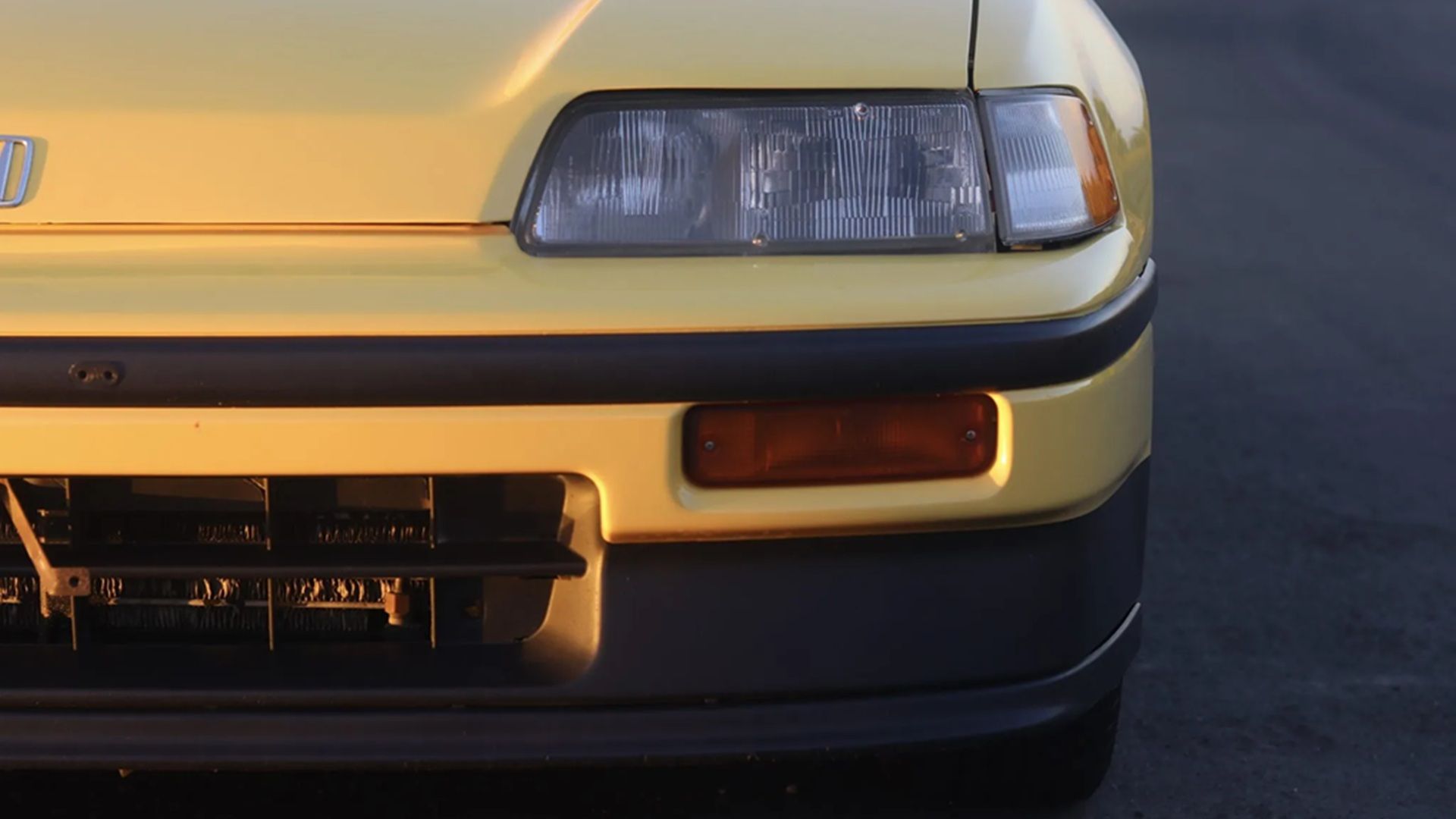
The 1988 Honda CRX Si Has Exploded In Value

Purchasing a classic car as an investment can be a dangerous business but equally a very lucrative one. The value of a particular model can spike at any moment, which can be disappointing when the model you want suddenly experiences a huge rise in worth before you can save enough to secure one at the original price. On the opposite side of the coin, this situation is a gift for owners looking to offload their vehicles, as they face a much larger payday than originally expected.
Honda
- Founded
-
24 September 1948
- Founder
-
Soichiro Honda
- Headquarters
-
Hamamatsu, Japan
- Owned By
-
Publicly Traded
- Current CEO
-
Toshihiro Mibe
This exact scenario has played out for the 1988 Honda CRX Si, which is now worth over double what it was this time last year.
This piece explores why the 1988 Honda CR-X Si has increased in value so much over the space of a year, and how much they cost now. All data came from reputable providers.
The CRX Si Brought Sports Car Fun To The Masses
In the 1980s, the legendary Honda Civic Type R was still nothing but a dream, and the standard Civic wasn’t able to provide the performance like the version available today. The closest you could get to a Civic Type R was the CRX Si, a small two-door coupe that used the Civic’s platform as a base, before going largely in its own direction. Having originally landed in 1984, a second-generation version arrived in 1987.
Alongside a considerable exterior refresh, the second-gen model had an advanced four-wheel double wishbone suspension setup, which ensured the updated CRX was more responsive and boasted superior body control than its forerunner. Honda also lengthened the car by a little over three inches and widened it by two inches to help enhance stability, while also helping to differentiate the vehicle from the Civic.
The Si Was The Range-Topper
There were three different CRX trim levels available in the United States, all of which featured differing power levels. The entry-level HF came with a 62-horsepower 1.5-liter four-cylinder, while the mid-range CRX had a more powerful 92-hp version of the unit. The premier Si trim came with a 1.6-liter inline-four making 106 hp, as well as an exhaustive list of extra equipment compared to the lower models.

Discussion
Discussion: Where’s the best place to find old classic cars for sale?
I’m interested in adding a classic car to my collection – any tips and tricks for where to find them?
The 1988 CR-X Si Is Worth A Fortune In 2025, And It’s Only Getting More Valuable
When it was shiny and new in 1988, a buyer had to hand over $10,195 to secure a CRX Si before adding any options. This amount equates to a little over $27,000 in today’s money. Until recently, you could have picked up a tidy example for a fraction of this. According to Hagerty’s Valuation Tool, these days are now over. In just 12 months, the value of a good-condition 1988 CR-X Si has rocketed by a huge 145%, with the vehicle now valued at over $22,000 compared to a little north of $9,000 in July 2024.

Related
The Previous-Gen Honda Civic Type R Costs The Same As A Brand-New Civic Si
Which is wisest for $30,000?
|
Condition |
July 2024 |
July 2025 |
Value Rise (%) |
|---|---|---|---|
|
Fair |
$4,500 |
$5,900 |
31.1% |
|
Good |
$9,200 |
$22,600 |
145.7% |
|
Excellent |
$24,200 |
$45,500 |
88% |
|
Concours |
$37,200 |
$69,800 |
87.6% |
Mint specimens are also worth a ton more, even if they are going up in value by a lower amount than good-condition examples. Last year, you could’ve bought a spotless example for around $37,000, but today you’d need to hand over just shy of $70,000 – a rise of nearly 90% year-on-year. Even low-quality CRXs are worth around 30% more compared to 2024, so picking up one that’s seen better days and restoring it could be a shrewd investment at this stage.
Escalating Rarity Is The Most Likely Reason For The CRX Si’s Rise In Value
The sportiest version of the CRX’s eye-opening value escalation is likely down to the fact that it’s getting more exclusive every year. Honda constructed just shy of 18,000 examples of the CRX Si in 1988. After nearly 40 years, many of them have been lost due to excessive rust and crashes. Plus, enthusiasts modified many of them for street racing or track use. These factors mean that examples in the original condition are increasingly rare.
Values in the classic car segment are booming, due in part to some drivers falling out of love with modern machinery. However, you might need to keep a vehicle tucked away in a garage if you want to see the kind of huge returns being seen on concours-quality examples of the CR-X Si.
The CRX’s Sweet Handling Still Holds Up Today
The CRX Si was designed from the start to offer precision and unfiltered fun when on the move, as illustrated by the low driving position, revvy 1.6-liter engine, and advanced suspension layout. Honda’s engineers even decided to remove the rear seats to help keep the vehicle as light as possible, a trick that worked, as evidenced by its lightweight 2,017 pounds. Despite producing barely more than 100 hp, the light frame meant it could sprint to 60 mph in 8.5 seconds.
|
1988 Honda CR-X Si |
|
|---|---|
|
Engine |
1.6-liter NA I4 |
|
Transmission |
5-Speed Manual |
|
Power |
106 hp |
|
Torque |
99 lb-ft |
|
0-60 mph |
8.5 seconds |
Due to using the same front-wheel-drive platform as the trusty Civic, front and rear stabilizer bars, and front disc brakes, the CRX offered a precise driving experience without being too twitchy. The refreshed 1990 model came with discs at the rear, too. A manual five-speed transmission was the only gearbox option available with the Si.
The little CRX may be a handy little earner should values continue to follow the same trend as over the last year. However, it can put a huge smile on your face should you find yourself unable to hide it away in the garage.

Related
Future Honda Models Worth Waiting For
These Hondas will keep you on the edge of your seat.
The CRX’s Successor Built On The Simple But Effective Recipe
Should the CRX be a little long in the tooth for your tastes, perhaps its successor might prove more palatable. The Del Sol replaced the CRX in 1992. Its novel feature was a removable aluminum roof panel that owners could stow in an area beneath the trunk lid when a person fancied a bit of sunshine. The Del Sol followed a similar recipe as its predecessors, using the FWD Civic platform but with a slicker, more modern body.
|
1992-1998 Honda Del Sol (US Spec) |
|
|---|---|
|
Engine |
1.5-1.6-liter NA I4 |
|
Transmission |
4-Speed Automatic, 5-Speed Manual |
|
Power |
102-160 hp |
|
Torque |
98-118 lb-ft |
|
0-60 mph |
7.4-9.9 seconds |
|
Average Auction Sale Price |
$10,704 |
A pair of more powerful 1.5 and 1.6-liter engines were available, with a 125-hp unit for the Si trim. When combined with the retained double-wishbone suspension setup, the Del Sol exceeded the pace of the older CRX.

Related
The Honda S2000 Nearly Had An Inline-Five Engine And An Automatic Gearbox
The S2000 might be famous for its banshee inline-four which redlines at 9,000 rpm, but it nearly had a family-friendly inline-five.
The Del Sol Will Set You Back A Similar Amount Of Cash At The Moment
When it comes to cost, the Del Sol hasn’t quite reached the level of its forerunner, as of the time of writing in July 2025. Classic.com, a site that collates auction listings from around the world, reports that the average sale price of the model currently stands at just over $10k. Even ultra-low mileage and well-looked-after examples can be had for under $20,000 at the moment, which makes it a tantalizing used option right now, especially if its value goes the same way as the CRX Si.
Sources: Honda, Hagerty, Classic.com