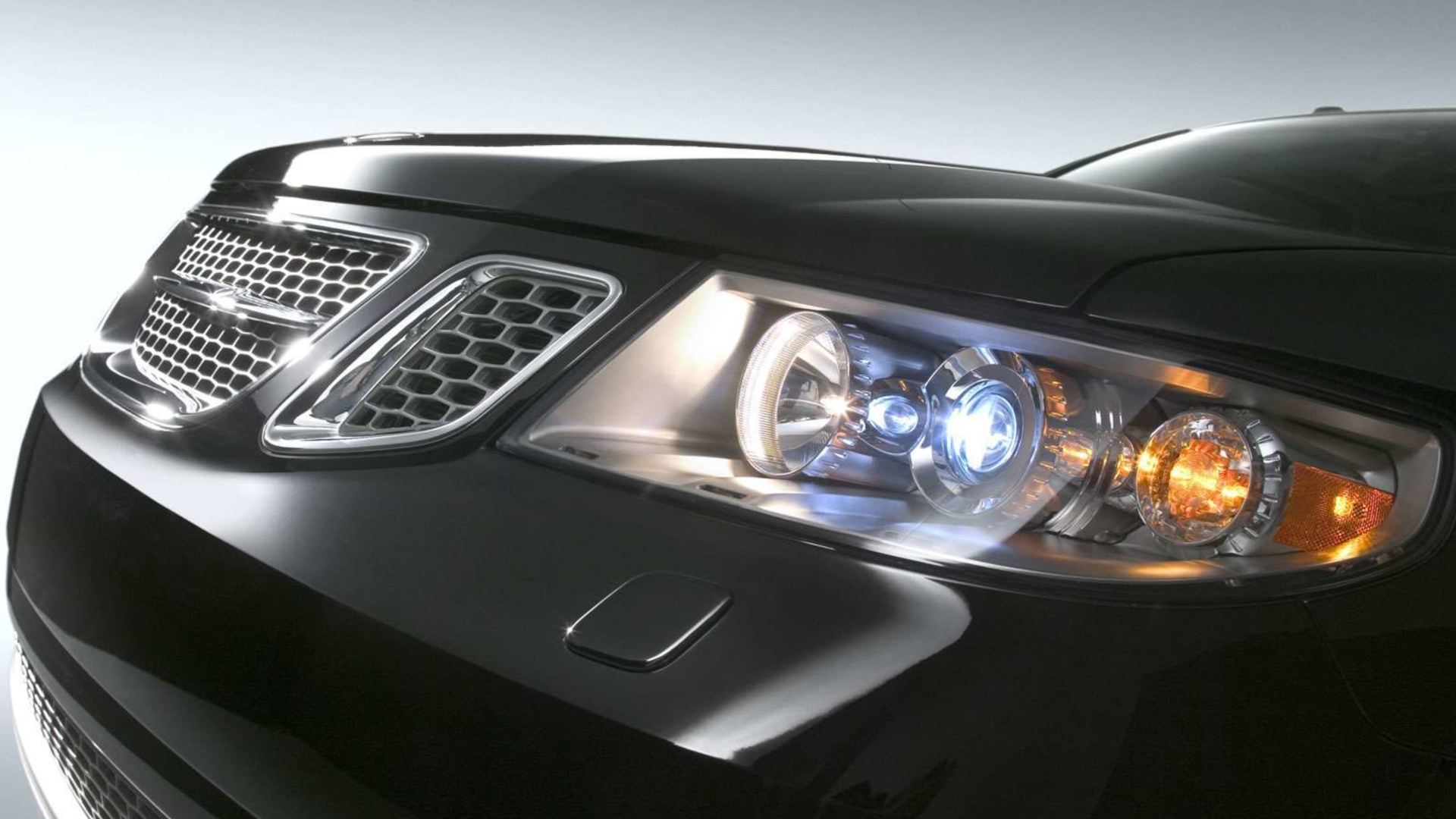
The Swedish SUV Built On The Bones Of A Chevy Trailblazer

Yes, Abba and Björn Borg were extremely successful. But it’s not always that the Swedes seem to get it right with the flick of a blonde curl of hair. Take the small automaker Saab as an example. Always offbeat with their hatchback designs and turbocharged engines, Saab could never really claim the sales figures its custodians, General Motors, had hoped for.
Other Trims
When things really started to slow down in the early 2000s, it was time for crisis management. In a last-ditch effort to garner some extra sales, GM simply took one of its own SUVs and rebranded it (along with minor cosmetic changes) as a Saab. Did the cowboy-on-a-reindeer exercise work? Not really, and for a number of reasons. Let’s dive into it.
This article is about the 9-7X, and opinions are based on personal experience with the 9-7X as well as peer reviews at the time.
A Last Roll Of The Dice
Unlike its compatriot Volvo, Saab has always struggled for decent numbers, perennially idling around the 100,000 sales per year figure. Decent, but not nearly enough to keep the R&D department – so essential in the modern tech-dependent world of the automotive market – cash flush to come up on a regular basis with new engines, drivetrains and decent development work. And once you get behind your competitors, the market simply moves along.

Related
Why Saab Failed To Capture American Hearts
Saab was one of the most innovative car manufacturers in business during the 20th century, but this is why it never conquered the US.
Too little, too late
It was for this reason that General Motors got a 50% stake in a struggling Saab, and released its new 900 and 9000 models, as well as the 9-3 and 9-5 in the early 2000s. But it was a case of too little, too late. Saab virtually depended on a hatch, a convertible and a sedan. And then the SUV market exploded into existence. If Saab was Santa Claus, it’s as if he was sitting on his sled, but his reindeer were wandering the forests.
|
Specifications of the Saab 9-7X 5.3i |
|
|
Engine |
5.3-liter V8 |
|
Power |
300 hp |
|
Torque |
330 lb-ft |
|
0 – 60 mph |
7.3 seconds |
As a last-minute plan, GM went the badge-engineering route, focusing on the big American market (where Saab was more known for its convertibles) by giving them a rebranded Chevy TrailBlazer, now souped up as a Saab 9-7X. The logic was clear: SUVs were suddenly all the rage in the States, the American market was huge, and it would take too long and be too expensive to start a new, distinct model for Saab from scratch.
It was a roll of the dice. But soon everyone would find that the Saab-sled had simply got stuck in the snow, forever.
The 9-7X – Saab’s first SUV
A short history of Saab
- Founded in 1945, to keep a warplane factory in operation
- Filed for bankruptcy in 2012
- Most famed for its turbocharged hatchbacks in the 1980s
- The most popular early models were the 96 in the 1960s, and the 99 in the 1970s
- Jerry Seinfeld drove a 9-3 Convertible on his show, Seinfeld
Taking the General’s GMT360 platform, already in use in the Chev TrailBlazer, Buick Rainier and Isuzu Ascender among others, the Saab engineers already had a solid platform to start with. Well, maybe a bit too solid. The GMT360 platform, as used in the TrailBlazer which formed the main basis for the new 9-7X, was already years old and old school for an SUV compared to the offerings that came out in the mid-2000s.

Related
The Saab Family Hatchback Powered By Subaru’s Most Iconic Engine
Underwhelming looks aside, this Saab hid a rally pedigree secret under its hood scoop.
By April 2004, when the 9-7X was introduced to the public at the New York Auto Show, the body on-frame chassis with its solid rear axle was yesterday’s technology. It was brutal and tough, but automakers quickly saw that the market wanted a soft, forgiving ride on smooth tarmac rather than a vehicle that could go boulder-bashing in the canyons. The modern luxury SUVs at the time, like Mercedes’ M-Class and the BMW X5, all used a unibody construction, which provided for a stiffer frame and better handling. When the 9-7X was launched as a 2005 model, the TrailBlazer it was based on was getting close to 5 years old.
Upgrades made it sportier
That said, Saab’s engineers did their best to put some disco bling into the TrailBlazer’s cowboy shoes. The suspension was stiffened with new coils and springs all round, and a new, thicker stabilizer bar was fitted to the front axle. The front brakes were upgraded, the steering sharpened and the throttle response quickened. Reviews at the time all mentioned the better, firmer ride of the 9-7X over that of the TrailBlazer. But there was still some bodyflex discernable – thanks to the body-on-frame design – when driving off-road.

Related
Experience Fighter Jet Speed With The Last Saab Ever
This is a piece of Swedish history.
Saab made only small improvements to the exterior of the TrailBlazer. A Saab grille was added, and clear lenses at the rear. Oval pipes and 18-inch wheels gave it a more intense presence. Inside, Saab managed to fit a similar-looking dashboard with wood inserts you would find in a 9-3. And yes, the ignition was moved away from the dashboard next to the handbrake, as is the case in all Saabs.
A muted market reaction
As a latecomer to the market, the 9-7X tried its best. Initially, two versions were offered; the Linear with GM’s 4.2-liter inline-6, and the higher-specced Arc with a 5.3-liter V8. Later, a range-topping Aero with GM’s new 6.0-liter V8 was added. But unlike Saab at the time, none of them were turbocharged. All were 4×4 driven, making them the first Saabs ever to do so.
Initial reports said that the Saab felt considerably more composed than the TrailBlazer, with stiffer shocks and springs that went a long way to calm excess body motions. The steeper steering ratio also helped to get rid of some of the on-center slop, while stiffer calipers combined with a more aggressive pedal ratio helped to alleviate the ‘Blazer’s soft brakes.
|
Specifications of the Saab 9-7X 4.2i |
|
|
Engine |
4.2-liter Inline-6 |
|
Power |
285 hp |
|
Torque |
276 lb-ft |
|
0 – 60 mph |
8.5 seconds |
But then, that price
The biggest problem for the 9-7X though, after the ride, was its price. At $39,240 for the inline-6 and $41,240 for the V8, the Saab was simply way too expensive compared to its direct competitors. In fact, it was the second most expensive SUV in GM’s portfolio, beaten only by the Cadillac Escalade. More importantly, it was $10,380 more expensive than the TrailBlazer on which it was based. Who would fall for that?

Related
One Of The Coolest Saabs Was Really A Subaru
Remember this rebadged Impreza wagon?
It’s no wonder sales were stuck in the Sweden snow. After a five-year model run, only a shade below 20,000 models were sold in total. The General sold Saab in 2010 to Dutch sports carmaker Spyker, after which it went on to Chinese group NEVS in 2012. The name was never to be used again.
Conclusion
Even though brand-engineering was a common practice in the early 2000s, it was the right call at the time to help Saab out of a difficult position. The engineers tried their best, but they only had so much to work with – the right product, but an old-school platform just as the market moved on to a more modern type of structure.
Which again shows the importance of R&D in the automotive world. You are judged on the competitiveness of your engine and chassis. But that’s a big mouth to fill, and if you don’t have the sales, you won’t have the resources to invest in new technology. It was a brave fight, but just like Benny and Bjorn, the last song had to be sung for Saab.
Sources: Saab Cars, General Motors.