
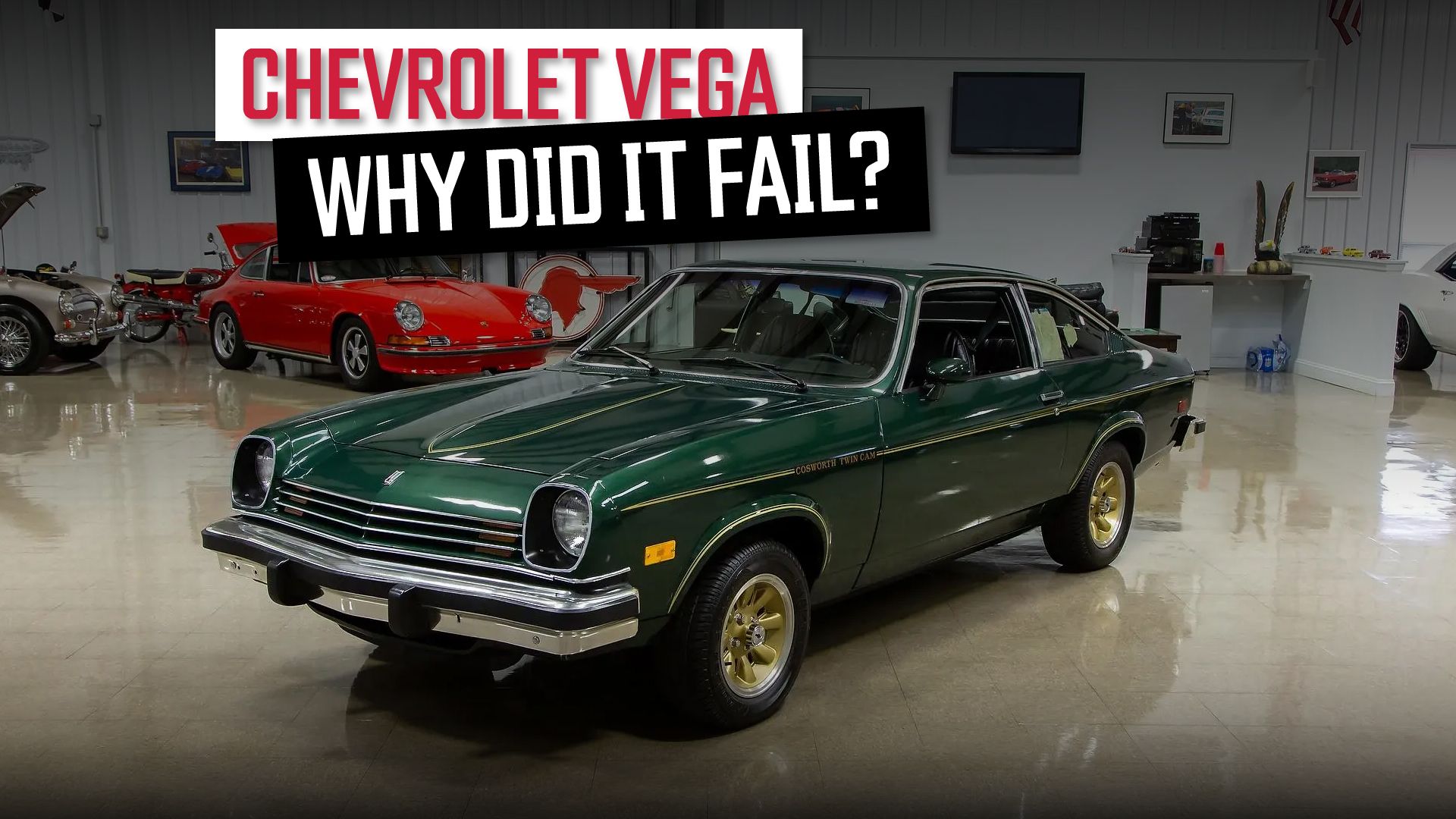
Why The Chevy Vega Was A Missed Opportunity

In 1970, General Motors unveiled the Chevy Vega with high hopes of revolutionizing the subcompact car market. Heralded as a game-changer, the Vega promised to outshine the competition with its innovative design and affordability. Yet, beneath the surface, a series of crippling issues would soon emerge, turning this potential star into one of the most infamous tales in automotive history. Today, the Vega is a car that holds a curious place in automotive history, remembered both for its potential and its pitfalls. Let’s take a closer look at this car and why it’s become infamous.
Origins Of The Vega
In the late 1960s, with fuel prices on the rise and consumers increasingly seeking economical options, GM identified a critical gap in its lineup. To compete with popular models like the Volkswagen Beetle, Toyota Corolla, Datsun 510, and the equally infamous AMC Gremlin, GM embarked on a mission to create a small, fuel-efficient vehicle. Enter the Chevrolet Vega, launched at an accessible starting price of $2,090. Named after one of the brightest stars in the night sky, GM hoped the Vega would shine as a beacon of innovation and quality in GM’s portfolio. At least, that was the plan.

Add CarBuzz to your Google News feed.
There were a total of 2,006,661 Chevrolet Vega cars produced during its seven-year life span. Production peaked at 2,400 units per day and the vehicle’s peak sales in 1974 topped almost half a million units. General Motors was heavily invested in this project and directed $75 million dollars into advanced manufacturing processes at its Lordstown Assembly plant in Lordstown, Ohio. This included automatic welding devices, industrial robots, computer-directed sub-assembly areas, conveyor belts, and quality control operations. Constraints in production, such as the need for rapid development and cost-cutting measures, would later contribute to the vehicle’s struggles. Some say the Chevrolet Corvair was the predecessor to the Vega and the Monza was the eventual successor.
A Promising Start
When the Chevrolet Vega first hit the market, it garnered significant enthusiasm. Its sleek design, innovative all-aluminum engine, and variety of body styles set it apart from other subcompacts. The Vega GT, with its sporty appeal, distinctive styling cues, and enhanced performance characteristics, stood out even further, attracting young drivers and car enthusiasts alike. The Vega car’s innovative engineering, including its all-aluminum engine and unibody construction, were seen as cutting-edge at the time. These attributes, along with a comfortable ride and decent handling, gave it a competitive edge in the subcompact segment. For a brief moment, it seemed like the Vega was destined for greatness.
One of the key factors that contributed to the Vega’s early appeal was its design versatility. Chevrolet offered the Vega in several body styles, including a sedan, coupe, wagon, and the unique Panel Express. The Chevy Vega wagon and hatchback were particularly appealing for their comfort amenities like carpets and headliner upholstery.

This wide range of options allowed buyers to choose a model that best suited their needs, whether they were looking for a practical family car, a sporty two-door, or a versatile wagon. By providing multiple configurations from the outset, Chevrolet aimed to attract a broad customer base and address various market demands. Chevrolet also made efforts to position the Vega as a sporty vehicle. The Vega GT package included performance-oriented features such as upgraded suspension, sporty exterior details, and improved interior trims with bucket seats. Optional equipment like alloy wheels, sport stripes, and additional gauges were aimed to enhance the driving experience and appeal to enthusiasts looking for an affordable yet fun-to-drive car. This combination of practicality and sportiness initially resonated well with the public, contributing to the Vega’s early success.
Vega Body Styles, Engines, And Production Years
| Year | Production Units | Engine |
|---|---|---|
| 1971 | 277,705 | 2.3L Inline-4 |
| 1972 | 394,592 | 2.3L Inline-4 |
| 1973 | 427,300* | G.3L Inline-4 |
| 1974 | 460,374 | 2.3L Inline-4 |
| 1975 | 207,764 | 2.3L Inline-4, 2.0L Cosworth DOHC |
| 1976 | 160,524 | 2.3L Inline-4, 2.0L Cosworth DOHC |
| 1977 | 78,402 | 2.3L Inline-4 |
Problems Faced By The Chevy Vega

Despite its strong start, highlighted in 1971 with a Motor Trend Car of the Year award, the Chevy Vega soon encountered a series of issues that would tarnish its reputation. The vehicle’s promising attributes were overshadowed by persistent problems, many of which stemmed from rushed production and cost-cutting measures.
Poor Construction and Reliability

The construction quality of the Chevy Vega was a significant issue that contributed to its downfall. The rushed production process and efforts to cut costs resulted in poor build quality. Many Vega cars left the assembly line with misaligned body panels, faulty components, and general assembly defects. This lack of attention to detail led to a host of reliability issues that plagued owners from the outset. Reports of electrical problems, defective axles, problematic throttles, malfunctioning controls, and subpar interior materials were common, undermining consumer confidence in the vehicle.
Engine Issues And Fires

The standard powertrain for the Vega was the GM 2300 engine, a 90-horsepower, 140 cubic-inch inline four-cylinder. This lightweight aluminum engine, known as “the world’s tallest, smallest engine,” was innovative but problematic. It suffered from severe vibration and noise issues, and it had a tendency to overheat due to its initial lack of a water-cooled radiator. The early models were plagued with engine overheating problems, which were a direct result of the cast aluminum alloy construction and the total lack of a water-cooled radiator. When a radiator was finally added in 1974, it was small and ineffective.
The engine block was prone to warping and cracking under stress, leading to frequent breakdowns and costly repairs for owners. These issues included oil consumption, leaks and overheating, which not only affected the vehicle’s performance but also posed a safety risk. Additionally, the engine often backfired, causing exhaust issues and exposing high temperatures to the nearby fuel tank. At worst, these problems could lead to engine fires, further damaging the Vega’s reputation.
Rustproofing Issues
Another major problem for the Vega was its susceptibility to rust. The vehicle’s body panels were not adequately protected against corrosion, which became an obvious issue for owners living in regions with harsh winters and salted roads. As a result, Vegas would often develop rust spots and structural deterioration within just a few years of ownership. GM’s later attempts to address rustproofing were too late to repair the vehicle’s tarnished reputation. Widespread rust issues not only marred the car’s esthetics but also compromised its safety and drastically reduced its resale value.
Recalls

One of the most significant blows to the Vega’s reputation was the numerous recalls it faced throughout its production run. By 1972, six out of every seven Vegas produced had been issued an official recall, covering a range of issues from engine problems to rust-related safety concerns. These frequent recalls eroded consumer confidence and created a perception of unreliability that the Vega could never shake. Despite GM’s efforts to address these defects, the damage was irreversible, contributing significantly to the vehicle’s declining sales and eventual discontinuation.
Why did Chevy stop making the Vega?
Chevy stopped making the Vega in 1977 due to persistent quality control issues, declining sales, and a tarnished reputation that made it unsustainable to continue production.

What body does a Chevy Vega have?
The Chevy Vega was available in several body styles, including a sedan, coupe, wagon, hatchback, and panel express.
What car looked like a Vega?
The Chevrolet Monza, which shared some of its platform with the Vega, bore a resemblance to the Vega, particularly in its sporty design cues.
Summary: Great Idea, Poor Execution

The Chevy Vega is the little car that could… but ultimately, couldn’t. It shot for the stars but landed somewhere closer to a rusty junkyard. Sure, it had its shining moments, but those were often overshadowed by the clouds of smoke billowing from yet another overheated engine.
Remembered for its bold ambitions and equally bold failures, the Vega is like that lovable, unreliable friend who always has a story to tell. It’s the punchline in automotive history jokes, a cautionary tale for carmakers, and a nostalgic nod to an era of high hopes and even higher engine temperatures. Some believe it’s an underappreciated car, despite its troubles. So here’s to the Chevy Vega, the car that aimed for Vega but settled for a spot in our hearts as the ultimate underdog of the automotive world.

